Selling
Selling a coin
List a coin from your collection, ship it on a tracked label we buy, and get paid once it arrives safely.
Published 22 September 2026 · Last updated 23 September 2026
Listing a coin
Sell from a coin already in your collection, so the listing inherits what the catalogue knows about it — mintage, year, denomination — and you fill in the rest.
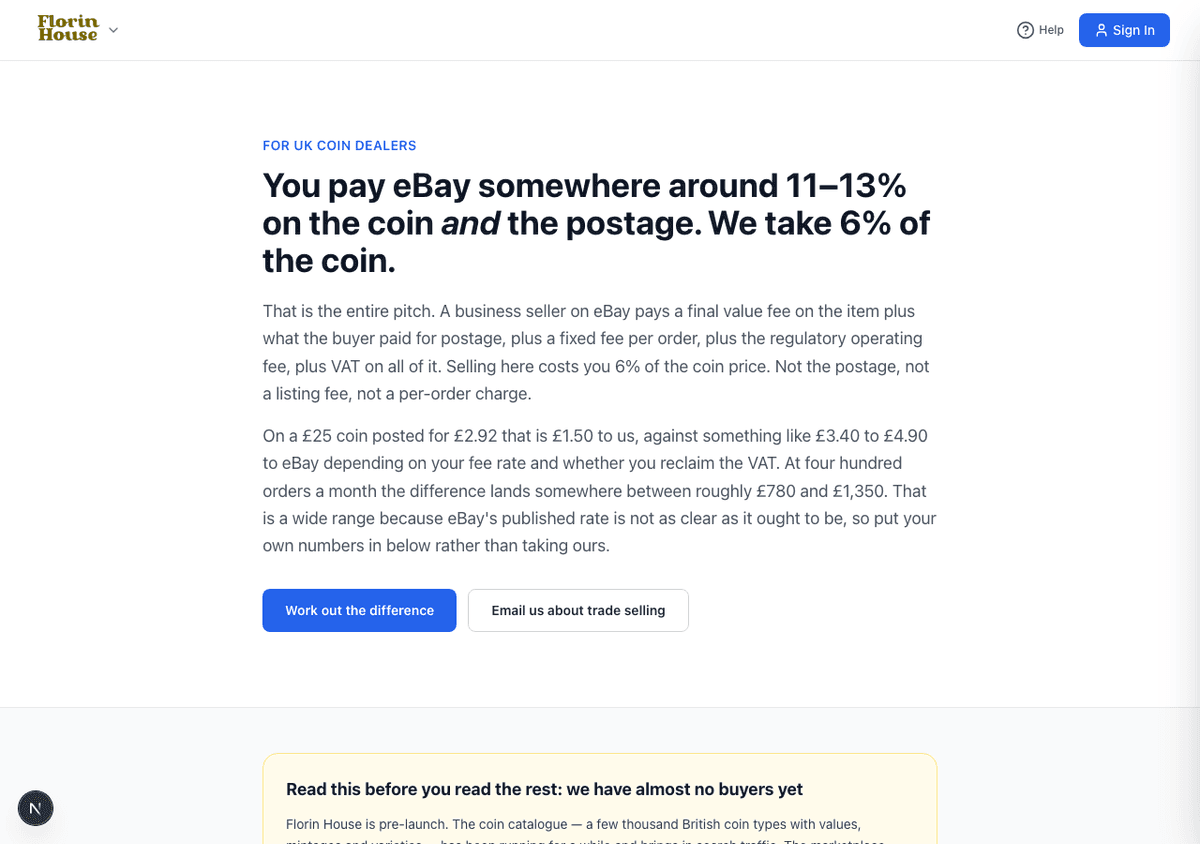
Selling as a dealer or a business? The page for coin dealers sets the 6% commission against eBay’s business-seller fees, using your own prices and order volume.
- 1Set up payouts once, so there is somewhere to pay you.
- 2Pick the coin from your collection and choose Sell.
- 3Set the condition honestly and add clear photographs of the actual coin.
- 4Set your price — see using a value to set a price and what you will actually keep.
- 5Publish. The listing appears in the marketplace, and collectors with that coin on a want list are told.
Photograph the coin you are actually selling, not a catalogue image. Most disputes are about condition, and honest pictures are the cheapest protection there is.
Coins under £5
A coin priced under £5 is listed as an add-on rather than a standalone item: buyers can add it to another order from you, but not buy it by itself. The buyer’s side of the same rule is here.
That is deliberate. The postage on a single cheap coin costs more than the coin, so selling it alone loses everyone money. In a parcel already going out it costs practically nothing to include — and most of the catalogue is under £10, so refusing those coins outright would empty the marketplace.
Getting paid
The buyer’s money is held until the coin reaches them. Once it has arrived and the protection window has passed with no problem raised, your payout is released automatically.
Payouts and their status are visible in your seller dashboard, so you can always see where money is. What comes off the top is set out in fees explained.