Picture this: you're sorting through your loose change after a shopping trip, and there it is—a familiar black and white panda gazing up at you from a 50p coin. This isn't just any commemorative coin; it's a small but powerful ambassador for one of the world's most recognizable conservation organizations. The 2011 WWF 50p transformed everyday pocket change into a conservation statement, carrying the World Wildlife Fund's message into millions of British homes.
Chapter 1
The Story Behind the Coin
By 2011, the World Wildlife Fund had been fighting the good fight for wildlife conservation for exactly fifty years. Founded in 1961, this remarkable organization had grown from a small group of passionate conservationists into a global force for nature protection. The Royal Mint chose this golden anniversary to honor WWF's tireless work, creating a coin that would literally put conservation into the hands of ordinary people across Britain.
What makes this tribute especially poignant is the timing. 2011 was a pivotal year for environmental awareness, with climate change discussions reaching fever pitch and species extinction rates climbing at alarming speeds. The WWF had just released sobering statistics about declining wildlife populations, making their panda symbol more relevant than ever. This wasn't just a celebration of past achievements—it was a rallying cry for the future, pressed into metal and distributed through the most democratic medium possible: everyday currency.
This wasn't just a celebration of past achievements—it was a rallying cry for the future, pressed into metal and distributed through everyday currency.
monzo
Switch & get a mystery reward of £20, £50 or £100
Free UK bank account, opened in minutes — joining through this link supports Florin House. New customers · T&Cs apply.
Chapter 2
The Design
The coin's design is beautifully straightforward, featuring the iconic WWF panda that has melted hearts and opened wallets for conservation causes since 1961. The panda sits prominently in the center, rendered in the Royal Mint's characteristic precise detail, surrounded by the familiar WWF lettering. It's a design that needs no explanation—even a child can instantly recognize what this coin represents.
What's particularly clever about this design choice is its universal appeal. Unlike some commemorative coins that require historical knowledge to appreciate, the WWF panda speaks a language everyone understands. The stark contrast of the panda's black and white markings translates beautifully to the silver surface of the coin, creating a striking visual that stands out even in a handful of mixed change. It's conservation awareness made tangible, a daily reminder that protecting our planet's wildlife matters.
It's conservation awareness made tangible, a daily reminder that protecting our planet's wildlife matters.
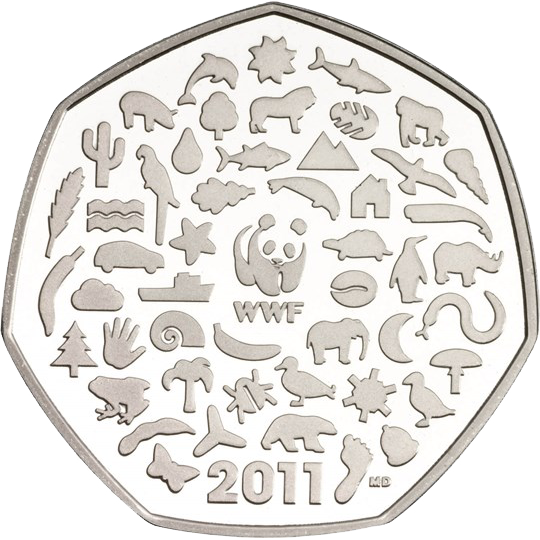
Obverse & reverse — click to flip
Chapter 3
Collector's Corner
Mintage
3,400,000
coins struck
Florin House Rarity
Uncommon
classification
Value
£1.75
estimated market
With 3.4 million coins minted, the 2011 WWF 50p sits comfortably in that sweet spot for collectors—common enough to be affordable but scarce enough to feel like a proper find. You'll still occasionally spot one in your change, though they're becoming less frequent in circulation as collectors gradually remove them from the wild. At around £1.75, it's an accessible entry point for themed collectors focusing on wildlife or conservation issues.
What's driving continued interest in this coin isn't rarity—it's purpose. Environmental consciousness has only grown stronger since 2011, making this coin increasingly relevant to collectors who want their hobby to reflect their values. Look for examples with sharp strike details, particularly around the panda's distinctive markings. The coin's message resonates just as powerfully today, perhaps even more so, as conservation efforts become ever more critical to our planet's future.
Environmental consciousness has only grown stronger since 2011, making this coin increasingly relevant to collectors who want their hobby to reflect their values.
Chapter 4
Did You Know?
The WWF panda logo was inspired by Chi Chi, a giant panda who lived at London Zoo in the 1960s and became one of the most popular animals in Britain
Giant pandas were so endangered in 2011 that fewer than 1,900 remained in the wild, making the WWF's choice of mascot tragically appropriate
This was one of the first British coins to directly promote a charitable cause through everyday circulation
The WWF has used the same basic panda design since 1961, making it one of the world's most enduring and recognizable logos
Explore this coin on Florin House
View detailed specifications, track its value, and add the WWF to your collection.
View WWFWritten with AI assistance from the catalogue record for WWF.