Picture this: it's 2003, and tucked away in your change from the corner shop is a coin that tells one of the most important stories in British history. The Suffragettes 50p isn't just spare change – it's a small bronze monument to the women who chained themselves to railings, faced imprisonment, and endured ridicule to secure something we take for granted today: the right to vote. When you hold this coin, you're literally holding a piece of revolutionary history in your palm.
Chapter 1
The Story Behind the Coin
By 2003, nearly a century had passed since the height of the suffragette movement, yet their story remained as powerful as ever. The Royal Mint chose to commemorate these remarkable women as part of their ongoing celebration of significant British milestones. It was a fitting tribute to honour figures like Emmeline Pankhurst and her daughters, who had transformed British society through their unwavering determination and strategic activism.
The timing wasn't accidental. The early 2000s saw renewed interest in women's history and achievements, with museums and educational institutions recognising that these stories had been overlooked for far too long. This coin emerged during a period when Britain was finally giving proper recognition to the women who had literally reshaped democracy. It serves as a tangible reminder that the right to vote – something we exercise so casually today – was hard-won through years of sacrifice, strategy, and sheer bloody-mindedness.
When you hold this coin, you're literally holding a piece of revolutionary history in your palm.
YOU’RE INVITED!
Trade gold, silver, stocks & crypto on eToro
Joining through this invite supports Florin House. Capital at risk · T&Cs apply.
Chapter 2
The Design
The coin's design beautifully captures the essence of the suffragette movement through carefully chosen symbolic elements. Rather than depicting specific individuals, the Royal Mint opted for imagery that would instantly evoke the spirit of these pioneering women – their banners, their determination, and their historic achievement. The design speaks to the collective power of the movement rather than focusing on any single figure, which seems entirely appropriate for a cause that succeeded through solidarity and shared purpose.
What makes this design particularly striking is how it manages to convey both the struggle and the victory within the confines of a 50p coin. The artistic elements work together to tell a story of progress and change, making it immediately recognisable even to those who might not consider themselves history buffs. It's remarkable how much narrative the designers managed to pack into such a small canvas.
The design speaks to the collective power of the movement rather than focusing on any single figure.
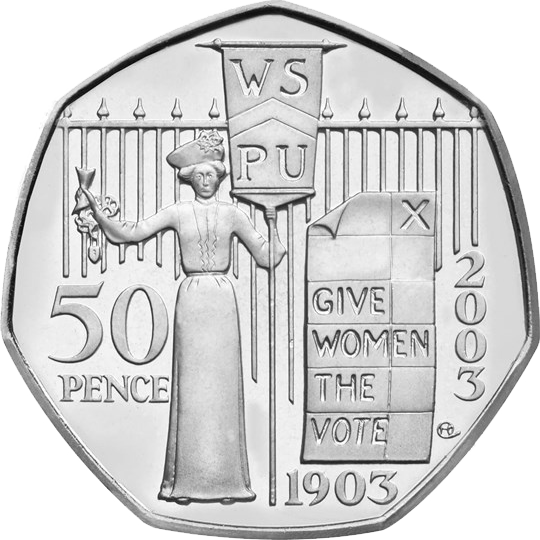
Obverse & reverse — click to flip
Chapter 3
Collector's Corner
Mintage
3,124,030
coins struck
Florin House Rarity
Uncommon
classification
Value
50p
estimated market
With just over three million coins struck, the Suffragettes 50p sits in that sweet spot for collectors – not rare enough to break the bank, but uncommon enough to feel like a genuine find. You won't stumble across one in your change every day, but they do turn up regularly enough to keep things interesting. Most examples you'll encounter will be in circulated condition, which actually adds to their charm – these coins have been out in the world, changing hands and spreading their important message.
For collectors focusing on social history or women's achievements, this coin represents exceptional value. At face value, it's accessible to virtually any collector, yet it commemorates one of the most significant social movements in British history. Keep an eye out for particularly well-preserved examples, as coins dealing with social progress themes have shown steady appreciation among collectors who value historical significance over pure rarity.
These coins have been out in the world, changing hands and spreading their important message.
Chapter 4
Did You Know?
The suffragette colours of purple, white, and green stood for dignity, purity, and hope – though you'll need to imagine them on this bronze coin
Some suffragettes were force-fed in prison when they went on hunger strikes, making their fight for voting rights literally a matter of life and death
The first woman to vote in a British general election was Countess Markievicz in 1918, though she was in prison at the time for her political activities
This coin was released the same year that the BBC aired a major documentary series about the suffragettes, bringing their story to a new generation
Explore this coin on Florin House
View detailed specifications, track its value, and add the Suffragettes to your collection.
View Suffragettes