Picture this: you're sorting through your change after a trip to the shops, and there it is—a £2 coin bearing the solemn image of a First World War soldier. In that moment, you're holding more than just currency; you're cradling a piece of national memory. The 2016 First World War Centenary Army £2 coin transformed everyday transactions into quiet moments of remembrance, carrying the weight of history in your pocket.
Chapter 1
The Story Behind the Coin
By 2016, Britain was deep into its four-year commemoration of the First World War centenary, marking 100 years since the conflict that changed everything. The Royal Mint had already begun this ambitious series of remembrance coins, but the Army edition held special significance—it honored the millions of ordinary men who answered their country's call between 1914 and 1918. These weren't professional soldiers initially; they were clerks and farmers, teachers and factory workers who found themselves in the trenches of France and Belgium.
The coin's release came at a time when Britain was actively encouraging remembrance education, with schools organizing trips to battlefields and families researching their own Great War ancestors. This wasn't just about looking backward—it was about ensuring that the sacrifice of that generation would never be forgotten by ours. The Royal Mint understood that by putting this soldier's image into general circulation, they were creating millions of tiny monuments, each one a conversation starter about courage, loss, and the true cost of freedom.
They were creating millions of tiny monuments, each one a conversation starter about courage, loss, and freedom.
YOU’RE INVITED!
Trade gold, silver, stocks & crypto on eToro
Joining through this invite supports Florin House. Capital at risk · T&Cs apply.
Chapter 2
The Design
The coin's reverse features a powerfully simple image: a First World War soldier in profile, his steel helmet unmistakable, his gaze fixed forward with quiet determination. The design captures that iconic silhouette that has become synonymous with the Great War—not glorifying conflict, but honoring the human cost of it. The soldier appears weathered but resolute, embodying the spirit of millions who served.
What makes this design particularly moving is its restraint. There are no dramatic battle scenes or flowing flags—just one man, representing all men who served. The inscription simply reads 'THE FIRST WORLD WAR 1914-1918' around the edge, letting the image speak for itself. It's a design that works equally well whether you encounter it in bright copper-nickel gleam fresh from the mint, or worn smooth by countless transactions—perhaps fitting for a coin meant to keep memory alive through everyday use.
There are no dramatic battle scenes or flowing flags—just one man, representing all men who served.
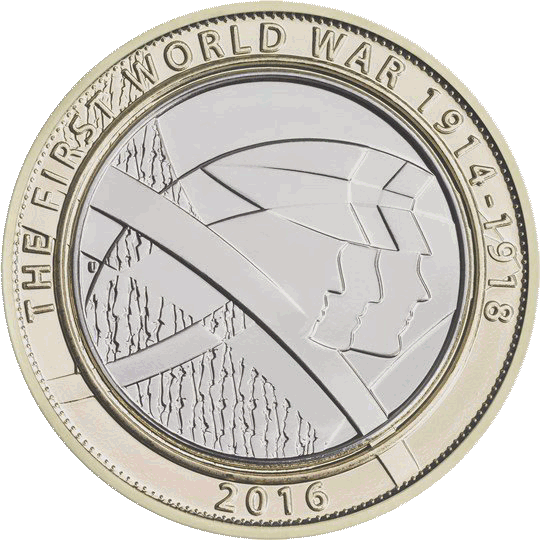
Obverse & reverse — click to flip
Chapter 3
Collector's Corner
Mintage
9,550,000
coins struck
Florin House Rarity
Uncommon
classification
Value
£2.00
estimated market
With nearly 9.6 million coins minted, this isn't the rarest £2 coin you'll encounter, but don't let that fool you into thinking it's not worth seeking out. The relatively high mintage means you've got a decent chance of finding one in your change, though they're becoming less common in circulation as collectors and the simply curious pull them from the everyday flow of commerce. Many people kept these coins when they first appeared, not necessarily as investments, but as keepsakes.
For collectors, this coin represents excellent value at face value—you're essentially getting a piece of commemorative history for the price of a coffee. While it may not command premium prices yet, its historical significance and the growing interest in military commemoratives suggest it's worth holding onto. Look for examples in the best condition you can find, as the detailed soldier design shows wear quite readily, and a crisp, clear impression makes all the difference to the coin's visual impact.
You're essentially getting a piece of commemorative history for the price of a coffee.
Chapter 4
Did You Know?
The Royal Mint produced five different designs for the WWI centenary, covering the Army, Navy, RAF, and commemoration themes over several years.
More British soldiers died on the first day of the Battle of the Somme than the total mintage of some rare £2 coins.
The distinctive bimetallic £2 coin design was specifically chosen to make commemorative issues more noticeable in everyday circulation.
This coin was released in the same year that the last French WWI veteran died, making it one of the final commemorations while any veterans were still alive.
Explore this coin on Florin House
View detailed specifications, track its value, and add the First World War Centenary Army to your collection.
View First World War Centenary ArmyWritten with AI assistance from the catalogue record for First World War Centenary Army.