Picture this: you're holding a £2 coin from 2013, but you're actually touching three and a half centuries of British monetary history. The Anniversary of the Guinea £2 isn't just commemorating any old coin – it's celebrating the legendary Guinea, a golden marvel that once commanded such respect that gentlemen's fees and luxury goods were priced in its honour. When the Royal Mint decided to mark this numismatic milestone in 2013, they weren't just creating another commemorative coin; they were bridging the gap between the golden age of British commerce and our modern decimal system.
Chapter 1
The Story Behind the Coin
The original Guinea burst onto the scene in 1663 during the reign of Charles II, crafted from gold sourced from the Guinea coast of West Africa – hence its exotic name. For over 150 years, this wasn't just any coin; it was the currency of prestige. Lawyers charged their fees in Guineas, racehorses were sold for Guineas, and the wealthy conducted their most important transactions in these gleaming gold pieces. The Guinea held such status that even after it was officially replaced in 1816, Britain's elite continued to price luxury goods and professional services in Guineas well into the 20th century.
By 2013, the Royal Mint recognised that this remarkable coin deserved proper recognition for its role in shaping British commerce and society. The 350th anniversary seemed the perfect moment to introduce a new generation to the Guinea's legacy, creating a modern £2 coin that would carry forward the story of this golden pioneer. It was a chance to remind us that our current coins are part of an unbroken chain stretching back through centuries of British ingenuity and craftsmanship.
For over 150 years, the Guinea wasn't just any coin; it was the currency of prestige.
monzo
Switch & get a mystery reward of £20, £50 or £100
Free UK bank account, opened in minutes — joining through this link supports Florin House. New customers · T&Cs apply.
Chapter 2
The Design
The 2013 Anniversary of the Guinea £2 beautifully marries historical reverence with contemporary coin design. The Royal Mint's designers faced the delightful challenge of capturing the essence of a 17th-century gold masterpiece within the familiar framework of our modern £2 coin. They've managed to incorporate design elements that echo the original Guinea's elegant proportions and classical styling, while ensuring the coin fits seamlessly into today's currency system.
What makes this design particularly special is how it serves as a visual bridge between past and present. The intricate details pay homage to the craftsmanship that made the original Guinea so revered, while the modern production techniques ensure every element is crisp and clear. It's rather like seeing a master painter's work interpreted by a contemporary artist – respectful of the original, yet unmistakably of its time.
The design serves as a visual bridge between the golden age of British commerce and our modern decimal world.
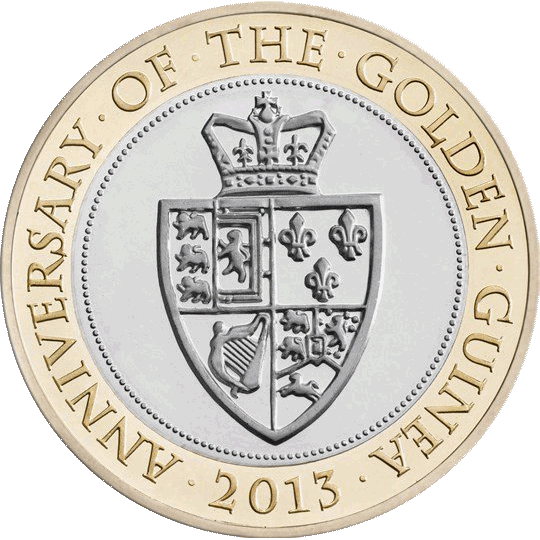
Obverse & reverse — click to flip
Chapter 3
Collector's Corner
Mintage
2,990,000
coins struck
Florin House Rarity
Uncommon
classification
Value
£2.00
estimated market
With just under 3 million pieces minted, this commemorative £2 strikes an interesting balance in the collecting world. It's common enough that most collectors can add one to their collection without breaking the bank, yet scarce enough to feel like a proper find when you spot one in your change. The coin's current market value sits at face value, making it an excellent entry point for new collectors interested in British monetary history.
What's particularly appealing about this piece is its storytelling potential – it's not just about rarity or precious metal content, but about the fascinating narrative it represents. Seasoned collectors often view it as a cornerstone piece for anyone building a collection focused on British heritage coins. Keep an eye out for examples in superior condition, as these commemoratives can show wear quite easily when they've been in circulation.
It's not just about rarity, but about the fascinating 350-year story it represents in your palm.
Chapter 4
Did You Know?
The original Guinea was worth 21 shillings, making it more valuable than a pound, which was worth only 20 shillings
Gentleman's clubs in London continued pricing membership fees in Guineas well into the 1960s, decades after the coin had disappeared
The phrase 'worth a Guinea a minute' became Victorian slang for something extremely valuable or expensive
Famous auction houses like Sotheby's only stopped using Guinea pricing in the 1970s, over 150 years after the coin's official retirement
Explore this coin on Florin House
View detailed specifications, track its value, and add the Anniversary of the Guinea to your collection.
View Anniversary of the GuineaWritten with AI assistance from the catalogue record for Anniversary of the Guinea.